
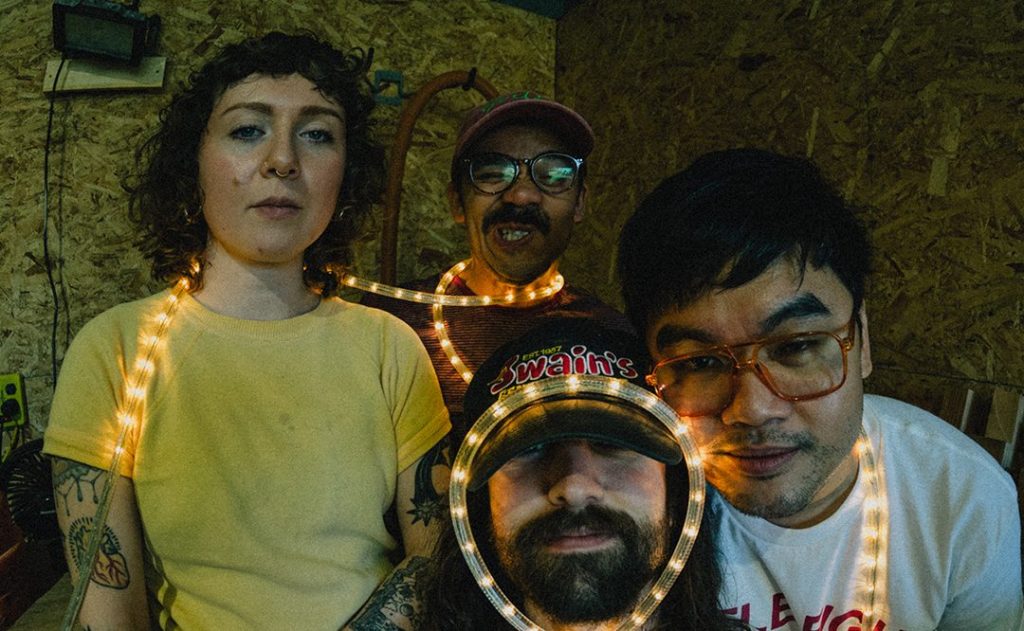
Dead Slow Hoot have been active on the UK music scene since 2014, when frontman Hugo Lynch first formed the band in Sheffield. Over the years, the lineup has evolved, but the project remains, at its core, Lynch’s solo vision.
We were lucky enough to get an early listen to their upcoming album Orbits Intervened, ahead of its official June release. This is the band’s fourth full-length, featuring nine tracks that span a wide emotional and sonic range.
The opener It Takes A Lifetime starts as a hypnotic folky piece, built on intricate percussion and a rich instrumental palette, all anchored by Lynch’s deep, resonant voice. By the end, it explodes into an epic climax – I can only imagine how powerful this must sound live.
The energy carries over into the next track, Worried About The Rain, which gently echoes one of my favorite bands, The National. Maybe it’s the unusual, expressive quality of Lynch’s voice, maybe it’s the way the instrumentation constantly pushes boundaries – or maybe it’s the underlying melancholy that gives these tracks their similar depth. Whatever it is, it works.
I also love that the band isn’t afraid to flirt with folk influences, as on Take It Or Leave It. But even when it’s just an acoustic guitar at the center, Dead Slow Hoot go far beyond traditional folk boundaries. Ambient noise textures and scattered instrumental fragments elevate the track into something much more immersive and atmospheric.
The first half of the record transitions into the second with Tired, a track that begins in a folky, introspective mood – but soon reveals a deeper story. As Lynch describes it, “this one’s like a breakup song about breaking up with music – specifically hating the process of writing this song.’” What stands out here is the rawness of Lynch’s vocals and the stripped-back production – just a gentle piano and a growing tension that ultimately bursts into post-punk chaos. For me, it’s one of the album’s standout moments.
Then comes Satellite, a driving, rhythm-heavy track that I can easily imagine lighting up a live set. The tight, metronomic drums remind me once again of The National – steady and precise.
The final track beautifully sums up everything the album does well. It starts modestly: a simple tap of reverbed drums, Lynch’s vocal line, and a haunting melody. Then it gradually builds, layer by layer – crystalline acoustic guitar, subtle textures – and finally swells into a cinematic, epic conclusion.
This review was made possible by SubmitHub


 motel void
Leave a comment