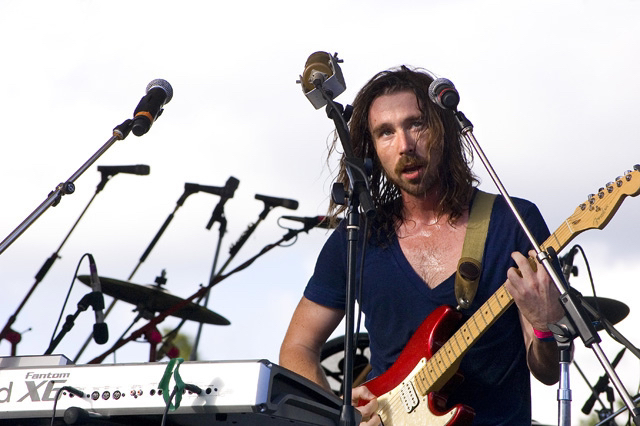
Michael Kingcaid, formerly the frontman of the Austin indie rock band What Made Milwaukee Famous (Barsuk Records), returns with his solo project kingcaid and the album Colorblind Quarterback. After years of touring major festivals such as Bonnaroo, Lollapalooza, and Austin City Limits and sharing stages with bands like Arcade Fire, TV on the Radio, and The Black Keys, Kingcaid now continues his path with his third solo release. While his previous record A Scar Is Born leaned toward personal and confessional songwriting, Colorblind Quarterback looks outward, reflecting on the current state of the world with sharp irony.
The album consists of eleven tracks, and the opening Ain’t That Nice convinces you within the first few seconds that you’re dealing with a remarkably strong record. From the dense, polished production to the confident songwriting and outstanding instrumental and vocal performances, everything immediately falls into place. The song rides on a simple but effective rock riff, while the vocal delivery carries a slightly indie-rock sensibility that adds character to the otherwise powerful arrangement.
The second track, Purgatory, expands the sonic palette and, with its intro, briefly recalls the atmosphere of early Nick Cave records or even bands like Black Heart Procession. That connection appears again in the expressive, emotive vocal performance and the varied instrumentation, where piano occasionally surfaces. The whole piece unfolds in a beautifully gloomy atmosphere – a little western, a little nocturnal – as if it were echoing through a dimly lit venue somewhere on the edge of town. A slightly unsettling guitar solo adds another memorable touch.
Here We Go Again keeps a hint of the loose, semi-acoustic feel of the previous song but introduces a completely different energy. Its structure nods toward the spirit of classic 1960s songwriting before opening up into a surprisingly pop-oriented chorus. The track feels almost epic in scale, with a playful, almost seafaring vibe that gives it a distinct sense of adventure.
The stylistic diversity of the album becomes even clearer with the intro of Drop That Man, where electronic textures blend with a highly danceable garage-rock groove, topped by a sensual vocal line. At moments it evokes artists like Tame Impala, while its playful experimentation also recalls figures such as David Bowie. The rhythm is infectious and brimming with energy — the kind of track that inevitably makes you tap your foot. The instrumental experimentation is particularly enjoyable, and the strange solo around the 2:30 mark is easily one of the song’s highlights.
The following etc. forever begins with a lo-fi piano motif before a prominent bass line launches the song into another burst of energetic momentum. The vocal delivery here is wonderfully laid-back, almost languid, yet still strikingly melodic and expressive. The chorus feels massive, once again showing how cohesive and confident the production is. I especially like how naturally the song slips back into its verses before eventually closing the same way it began, with the playful lo-fi piano returning.
At the midpoint of the album sits the more acoustic Will You Take a Second for a Minute, another standout that works beautifully as an indie-folk anthem. It likely features the most melodic vocal line on the record, while its gorgeous, almost spiritual bridge around the one-minute mark brings to mind bands like Fleet Foxes. When the rock-driven chorus arrives, it reminds you how clearly defined kingcaid’s musical identity really is.
Monster leans slightly toward blues and pop influences, offering a hazy, expansive chorus that feels both epic and gently psychedelic. Among the final four songs, Nothing stands out in particular. It begins as a raw acoustic ballad steeped in Americana before suddenly breaking into a powerful wall of rock sound. I Think I’m Alone Now carries a melodic and melancholic tone that at times recalls some of Weezer’s stronger material. Chased by Shadows returns to a more acoustic setting, and it’s worth emphasizing again how impressive the production on this record is. Not only do the electric guitars sound thick and immersive, but the acoustic guitar tones are equally rich and captivating. The track also echoes the moody atmosphere of Black Heart Procession, balancing charm and mystery while showcasing a colorful instrumental palette.
The album closes with the longest track, Why. It begins with an almost ambient introduction before drifting into a hazy groove reminiscent of The War on Drugs. The song leans toward psychedelia, its blurred and dreamy atmosphere providing a gentle and satisfying conclusion to the record.
Colorblind Quarterback is a confident and stylistically rich album that showcases Michael Kingcaid’s strengths as a songwriter and performer. Across its eleven tracks, the record moves effortlessly between indie rock, folk, art rock, blues, and psychedelic influences while maintaining a cohesive sound built on strong melodies, thoughtful arrangements, and excellent production.
This album was discovered via Submit Hub

 motel void
Leave a comment