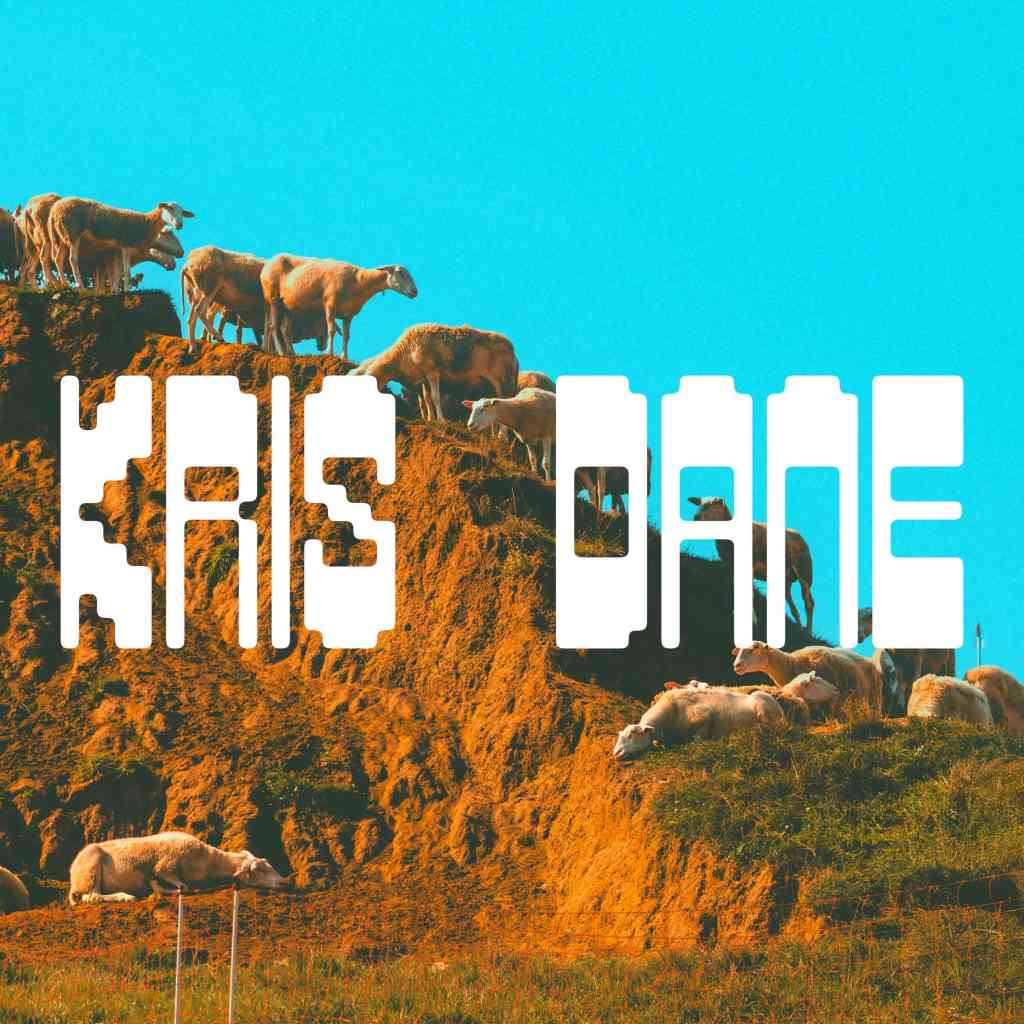
Belgian singer-songwriter Kris Dane returns with a self-titled new album (out via PIAS Recordings). Over the past two decades, Dane has quietly established himself as one of Belgium’s most distinctive and sincere voices. A founding member of dEUS and later associated with Ghinzu, he has since carved out a personal artistic path, largely untouched by trends or commercial expectations. With his ninth album, the Antwerp-born songwriter continues along this idiosyncratic trajectory.
The album opens with Cherry, where a striking piano motif and an emotionally charged vocal take center stage. Yet beneath these dominant elements, a subtle layer of ambient noise gives the track additional depth. Gradually, simple drums and acoustic guitar enter the mix, and there’s a playful use of stereo space – at times reminiscent of The Beatles or the solo work of John Frusciante. The track builds in intensity, though it never aims for an overtly epic climax. Instead, its progression feels carefully restrained, with the final minute and a half – purely instrumental – working particularly well.
Get It On, a track stretching past six minutes, begins with an electronic ambient intro. It unfolds slowly, almost meditatively, before a female vocal enters. Around the midpoint, a beat emerges – danceable, yet still rooted in a trip-hop atmosphere. What makes the track especially engaging is the way individual elements drift in and out, sometimes appearing only fleetingly. Eventually, the song shifts into a more unsettling, nocturnal club mood.
That makes All Things Beautiful all the more surprising. It opens with a truly gorgeous intro – somewhere in the vein of Nick Drake. The acoustic guitar sounds rich and intimate, while Dane’s vocal is both fragile and precise, even slightly cracked in tone, leaning toward a Bob Dylan-like delivery in the second half. Subtle production details flicker throughout the track, and its ambient outro recalls the delicate beauty of Carrie & Lowell by Sufjan Stevens.
Next comes the eight-minute Beyond the Wall, immediately notable for its memorable chord progression and a warm, Americana-tinged melody that occasionally evokes Bruce Springsteen. The addition of harmonica enriches the atmosphere, giving the track a sense of openness and movement – it even brings back memories of my own travels through the American landscape. Though it never builds toward a dramatic peak, its hypnotic flow makes its length feel effortless, not unlike the extended compositions of The War on Drugs.
The album’s second half opens with the jazz-leaning Half Moon, which carries a more meditative, almost pastoral mood. Listening to it feels like an evening walk through familiar countryside. Once again, the use of female backing vocals adds both intensity and emotional weight.
Joy – perhaps even by name – brings to mind the work of Sam Beam. It’s a nostalgic, gently melancholic acoustic piece, yet filled with a quiet sense of hope. Toward the end, however, it shifts into a more noise-inflected passage. A similarly acoustic mood continues with Carob Tree, one of the album’s highlights. Its natural, unforced atmosphere stands out, and its repetitive melody proves especially memorable.
The album closes with the eight-minute Hourglass – a fitting point to reflect on the production and the conditions in which the record took shape. To record the album, Kris Dane decamped to rural Nottinghamshire, near Sherwood Forest, working with producer Jamie Evans on a set of songs that resist compression – both literally and figuratively. Beyond their length, the tracks feel strikingly open and dynamic, never cramped or overworked. Hourglass, with its beautiful and subtly experimental ending, stands as the clearest expression of this approach.
This album was discovered via Submit Hub
 motel void
Leave a comment