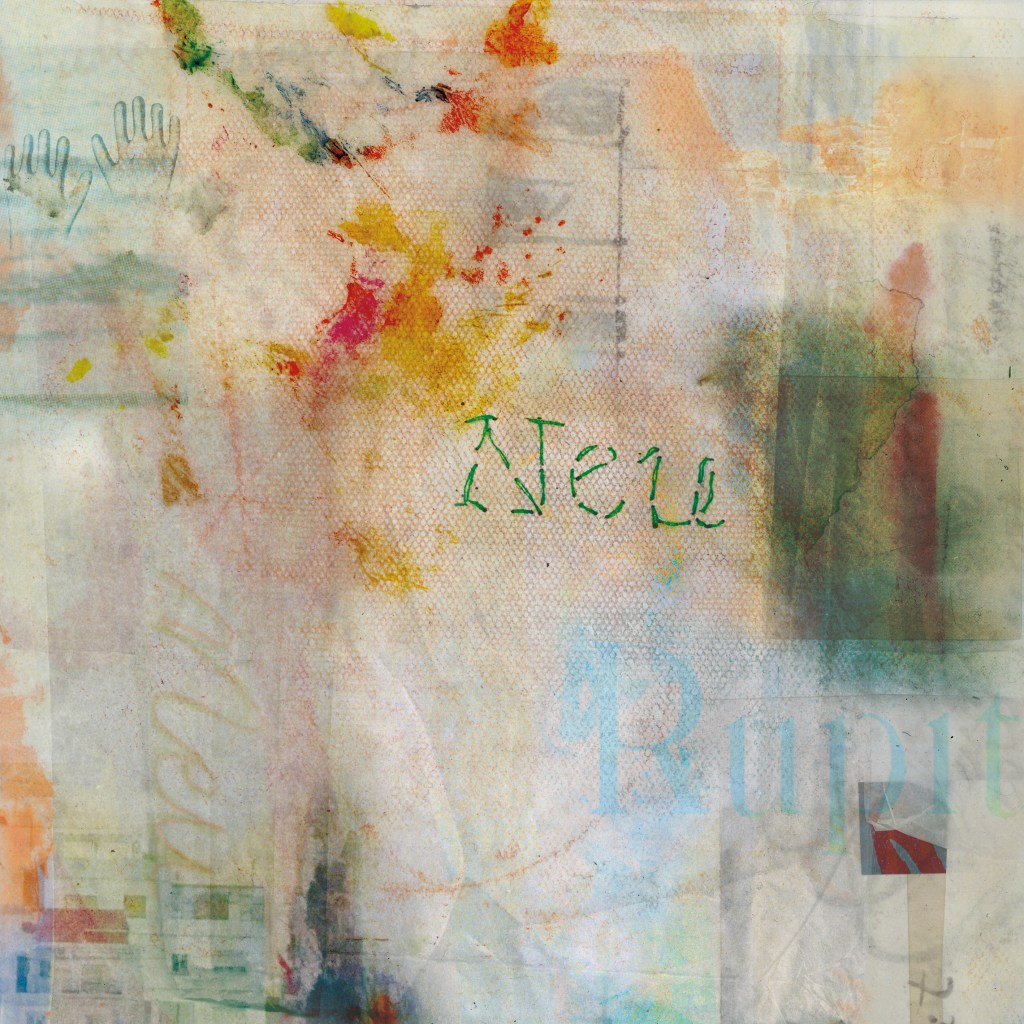
NEU is the debut album from the multidisciplinary art and music project Rupit, a Dutch project with roots in Mallorca. It’s a genre-bending odyssey through sound, following a conceptual narrative where experimental storytelling guides the songwriting and every song becomes a small journey of its own. The production serves as the next frontier of the creative process, deepening the immersion into the spirit world imagined by the project’s frontman and writer, Bernardo van Bemmelen.
The album is a fairly substantial 12-track record, and it immediately draws you in with Omen, which captures the warm, summery atmosphere already suggested by the photo Rupit uses as its Spotify profile image. The song has a fantastic melodic line – especially when the verse comes in around 1:30, you get the feeling that this is going to be a very interesting record. Van Bemmelen is also a great vocalist, with a distinctive and fascinating tone to his voice. The song remains very chill before gradually expanding into a much fuller band sound during its final minute. A great opener.
Flicker leans further into lo-fi territory, with a very prominent vocal that partly reminds me of American Football, or more specifically the solo work of their frontman Mike Kinsella as Owen. It’s a very gentle, understated and atmospheric song that slowly builds throughout. I particularly enjoy all the little noises and textures that emerge towards the end. Burning continues in a similar atmospheric vein, again built around prominent acoustic guitar, while the vocals become a little more experimental and the drums introduce a subtle jazz feel. Overall, it has a distinctly artsy character and provides a welcome change of pace, making it clear that NEU is more than simply a collection of indie songs.
Neu, Pt. 1 is a short, roughly 100-second interlude built around a conversation in Spanish. The first half of the album also includes Rain and Copeo. The former is the longest track on the record and once again relies on acoustic guitar and a gentle beat. I really enjoy the female backing vocals by ninety, which eventually move into the foreground. It’s a highly emotional song that incorporates multiple languages and, like several of the tracks before it, makes great use of gradual build-up. Here, perhaps thanks to the longer runtime, the progression works especially well, culminating in a genuinely energetic finale.
Copeo suddenly takes us into a much more playful mood, partly reminding me of José González’s more recent work. After about a minute and a half, however, the simple, upbeat acoustic song suddenly breaks into a much more experimental passage, leaving us with just a beat and what sounds almost like the ambience of a city street. The transition works beautifully before the acoustic guitar returns and the more playful section comes back at the end.
The second half of the album begins with Paradís, combining acoustic guitar with a full-band arrangement. It’s a really fun and enjoyable instrumental section, and I don’t mind at all that the vocals don’t appear until almost a minute in – they function more as another layer of texture than as the main focus. The distorted guitars work particularly well, and I really like the way the song keeps evolving. The vocals finally arrive a minute before the end, and I have to say that the return of Spanish is particularly pleasing to my ears.
Then comes another interlude, City Interlude, a little under two minutes of noticeably darker ambient territory. It gives us a chance to catch our breath before the album heads into its final stretch.
Near the end comes a trio of tracks—Neon, Angel and Distance. Neon is a very chill, slow-moving song with distorted vocals and an exceptionally atmospheric production. I’d even call it one of the album’s highlights. I especially love the mix: the vocals are deeply immersed in the sound, yet they still manage to feel emotional and powerful.
With Angel, we move back into more energetic territory. The vocal delivery reminds me of various contemporary British post-punk bands, and the song has a real sense of drive that I imagine would work incredibly well live. Distance then makes another 180-degree turn stylistically. It’s a simple, stripped-down acoustic song featuring interesting processed backing vocals. The whole thing flows beautifully, almost like a river gradually fed by smaller streams joining along the way.
The album closes with Neu, Pt. 2, a very Bon Iver-esque track that blends an acoustic riff with ambient production, intriguing vocal ideas and a deeply emotional atmosphere. It once again brings Owen to mind, and makes for a beautiful ending to the record – diverse, emotional and meticulously produced, much like the album as a whole.
This review was made possible by SubmitHub



Leave a Reply