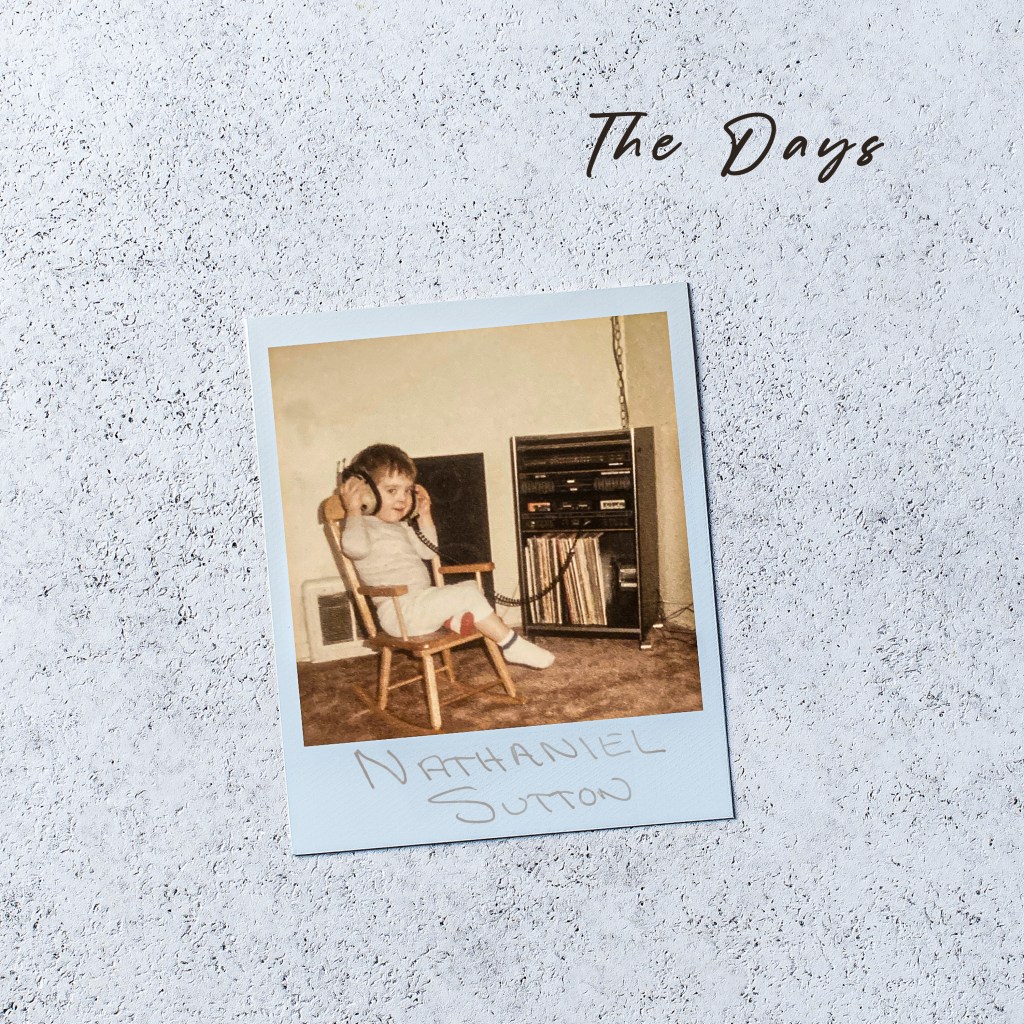
The Days is the new full-length album from Nathaniel Sutton. Blending moody full-band arrangements with stripped-back acoustic moments, the record explores the past, growing up, love, loss, and letting go.
With sixteen songs spanning fifty minutes, The Days is a substantial record at a time when many artists seem to favor shorter albums with runtimes closer to half an hour. Still, I’m glad there are musicians who continue to embrace the album as an artistic statement, allowing their songs to breathe and their ideas to unfold over a longer stretch of time.
The first track, The Passenger, opens with simple acoustic guitar and synths, while Sutton’s vocals remain relatively understated, carrying a slight Bruce Springsteen vibe. It’s a straightforward song that gradually draws you into the record — a great introduction. Vintage Glow follows with heavier drums and an incredibly catchy chorus accompanied by piano, before a beautiful ’80s-style synth takes us back to the era of old video games. It’s a wonderfully nostalgic song. Little Things is much more minimalist, bringing to mind Casiotone for the Painfully Alone. Sutton’s vocals feel almost swallowed by the echo, giving the whole track a warm, intimate, and emotional quality.
I like how Sutton moves between this more electronic, bedroom-produced sound and a more traditional indie-folk approach. Ain’t No Funeral, featuring additional vocals from Salty Auntie, is a great example of the latter. The song feels gentle and touching throughout, and I particularly enjoy the instrumental passages, such as the one around 3:10, where the synths really shine. A beautiful, catchy chorus follows, making this an excellent track.
Memories stands out with its simple rhythm and pleasant indie vibe reminiscent of the 2000s and early 2010s. Sutton’s deeper voice works particularly well here. It’s followed by the thirty-seven-second interlude The Days, which manages to pack a surprising amount of emotion into such a short space and works beautifully as a transition into the album’s seventh track, The Cool. With its synth-driven atmosphere, the song feels genuinely anthemic. The energetic instrumentation is complemented by Sutton’s pop-leaning vocals, making it sound like something you might stumble across on an alternative pop radio station. The build-up before the chorus is particularly effective. This is arguably one of the album’s biggest potential highlights, although I’m also glad the entire record doesn’t sound like this, as Sutton proves equally capable of writing songs that are much more understated.
The second half begins with 1995, another example of that more intimate approach. It starts with pleasant lo-fi acoustic guitar before a bedroom-pop beat gradually enters the picture. Ellie Heath’s vocals complement Sutton’s beautifully, and the song captures a nostalgic ’90s atmosphere while revisiting the awkwardness and nostalgia of growing up.
Next comes Stay With Me, a lovely, intimate acoustic moment. But the biggest highlight of the second half – and perhaps the entire album – is Brown Eyes, which features an absolutely disarming intro. The production is excellent, with a sound that occasionally recalls the earlier work of The National. The electric guitar is particularly beautiful, while the melancholic atmosphere and Sutton’s expressive vocals make the whole thing incredibly moving. There are no grand, explosive choruses here; instead, the song unfolds quietly, building its emotional weight gradually. Only toward the end does it rise and swell in a way that brings Bon Iver to mind.
Back When follows naturally, blending bedroom lo-fi pop with field recordings and extending the atmosphere established by the previous track. On Hurricane, another acoustic highlight, Lily Monaghan joins Sutton on the chorus, adding another layer of emotional depth. I particularly enjoy the final minute, when everything gradually builds and the repetitive vocal melody takes on an almost hypnotic quality.
There’s even some harmonica on Like Neil Young Did, while the piano adds an interesting touch to Sleepover, a nostalgic and minimalist song that subtly signals the album is nearing its end. Everything closes with Threshold, one of the shortest tracks on the record. Sutton’s deep, melodic voice and the simple, captivating riff bring Pedro the Lion to mind. But the final forty seconds of unexpected rock chaos put a smile on my face, almost like a hidden track at the end of one of my favorite Built to Spill albums.
While much of The Days looks backward, the album gradually shifts from reflecting on the past to appreciating the present and embracing the uncertainty of what lies ahead. It’s a fitting conclusion to a record so deeply rooted in nostalgia, ending not with a sense of longing for what’s gone, but with a quiet curiosity about what comes next: “I can’t wait to see what’s in store when I open the next door, what could there be on the other side of this threshold.”
This review was made possible by SubmitHub


Leave a Reply